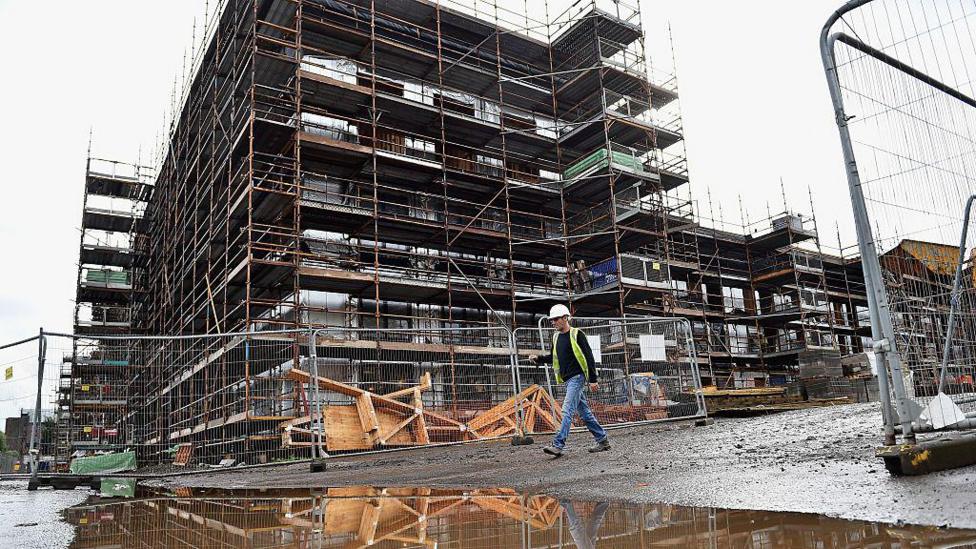
Glasgow City Council's affordable housing supply programme has fallen 29% short of its annual target, with only 448 homes recorded as complete against a goal of 633. The shortfall, attributed primarily to rising construction costs, is not an isolated Glasgow problem — it is a warning shot for every UK city attempting to deliver affordable and social housing at scale in an era of stubborn build cost inflation, contractor insolvencies, and squeezed public subsidy.
For property investors, this matters far beyond Scotland's largest city. Affordable housing delivery has long acted as a pressure valve on private rental markets, particularly in cities with acute housing need. When shortfalls of this magnitude occur — roughly 185 homes missing from Glasgow's pipeline alone — the private rented sector absorbs the excess demand. Landlords and build-to-rent operators in Glasgow, and by extension in comparable regional cities such as Liverpool, Newcastle and Leeds, should expect this to translate into firmer rental growth over the next 12 to 18 months, particularly at the lower-value end of the market where affordable housing would otherwise have provided competition.
The underlying cause is structural rather than cyclical. Build cost inflation across the UK has moderated from the double-digit peaks of 2022 but remains elevated, with materials such as timber, steel reinforcement and insulation products still running 15-20% above pre-pandemic benchmarks according to BCIS data trends. Labour shortages compound the problem: skilled trades remain scarce following Brexit-related workforce contraction and an ageing construction workforce, pushing wage costs higher even as housebuilders report thinner margins. For registered social landlords and housing associations operating on fixed grant funding — as is the case with Glasgow's affordable supply programme — these cost pressures are not easily absorbed. Grant rates set years in advance simply have not kept pace with tender prices, leaving a widening viability gap that stalls schemes or forces phased delivery.
This has direct implications for how investors should read housing delivery data across other UK regions. Manchester and Birmingham, both of which have ambitious affordable housing targets tied to city-region devolution deals, face similar exposure. Birmingham in particular, already navigating the fallout from its council's effective bankruptcy and Section 114 notice, has limited capacity to bridge funding gaps through additional local subsidy. Investors eyeing regeneration-linked opportunities in these cities should factor in a higher probability of delayed or reduced affordable components within mixed-tenure developments, which in turn affects planning obligations, Section 106 negotiations, and the viability assumptions developers present to local authorities.
The knock-on effect for first-time buyers is equally significant. Shared ownership and other intermediate affordable products typically form part of these missed targets, meaning fewer stepping-stone options into ownership in a city where average house prices, while still well below London and the South East, have risen faster than wage growth over the past three years. Glasgow's average property price sits around £190,000, modest by UK standards, but affordability pressure is intensifying at the entry level precisely where affordable housing programmes are meant to intervene. First-time buyers priced out of shrinking affordable pipelines will increasingly compete for the same modest private stock as buy-to-let landlords, tightening yields on smaller units and potentially pushing more demand toward mortgage products with higher loan-to-value ratios.
Looking ahead, the coming 6 to 12 months will likely see Scottish and UK government housing bodies under pressure to revisit grant funding formulas, given that flat-rate subsidies are increasingly unworkable against a moving cost base. Developers and housing associations will push for either higher grant per unit or greater flexibility on tenure mix to preserve scheme viability, and some may lean further into modern methods of construction to control costs, though MMC adoption in Scotland remains patchy compared with England. Commercial investors and forward-funders backing residential-led regeneration should treat missed affordable targets as a leading indicator of margin compression across the wider development sector, not a localised administrative failure.
The lesson for the market is unambiguous: affordable housing delivery is now a genuine bottleneck constraining the broader housing supply chain, and cities unable to close the funding-cost gap will see slower overall completions, tighter rental markets, and growing pressure on entry-level ownership. Glasgow's 29% miss should be read as a bellwether rather than an anomaly, and investors with exposure to UK residential development, PRS, or regeneration-linked commercial assets would be prudent to stress-test their assumptions against continued grant-cost misalignment well into 2025.
Key Takeaways
- Glasgow delivered 448 of 633 targeted affordable homes — a 29% shortfall driven chiefly by construction cost inflation and fixed grant funding.
- Landlords and build-to-rent operators in comparable regional cities (Liverpool, Newcastle, Leeds) should anticipate firmer rental growth as affordable supply gaps push demand into the private sector.
- Fixed-rate housing association grants have not kept pace with build cost inflation, creating a viability gap likely to persist without policy intervention.
- Commercial investors and developers should stress-test regeneration and mixed-tenure schemes against continued affordable housing shortfalls through 2025.


