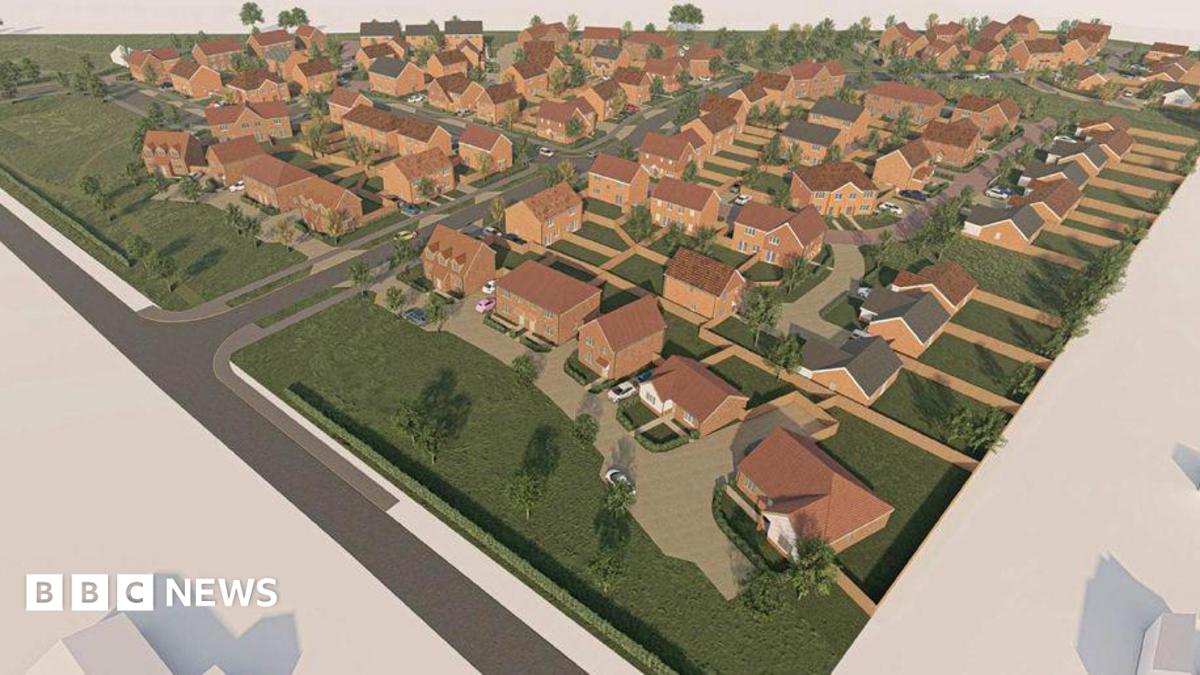
Saffron Housing Trust has lodged plans for an estate of 152 affordable homes in Broadland, Norfolk, arguing the scheme is necessary to address what it describes as the district's "considerable under-delivery" of affordable housing stock. The proposal, if approved, would represent one of the larger single affordable housing interventions in the county in recent years, and its progress through planning will be watched closely by housing associations, local authorities and institutional investors grappling with similar shortfalls across England.
The significance of this scheme extends well beyond Norfolk's boundaries. Broadland, which sits on Norwich's northern fringe, has been one of the fastest-growing local authority areas in the East of England over the past decade, yet affordable housing completions have consistently lagged behind both local plan targets and objectively assessed need. This is not an isolated case: government data shows that England delivered roughly 53,000 new affordable homes in the most recent full reporting year, well short of the 90,000-plus annually that housing charities and the Local Government Association estimate is required simply to keep pace with demand. Broadland's own local plan has flagged shortfalls running into the hundreds of units against its five-year housing land supply obligations for affordable tenures specifically.
For buy-to-let landlords and private rental sector investors, persistent under-delivery of affordable and social housing has a direct, if indirect, effect: it sustains upward pressure on private rents in areas where households priced out of the affordable sector are forced into the open market. Norfolk has seen average private rents climb by more than 8% year-on-year in parts of the Norwich commuter belt, a trend mirrored in comparable growth corridors around Leeds, Manchester and Birmingham, where green-belt and edge-of-city expansion has similarly failed to deliver proportionate affordable stock. Landlords operating in Broadland and neighbouring South Norfolk should treat schemes like Saffron's as a leading indicator of where local authorities may begin applying more assertive Section 106 requirements on future private consents, potentially tightening the economics of smaller-scale build-to-rent and conversion projects.
From a development and planning perspective, the Saffron proposal illustrates a broader shift in how registered providers are positioning themselves within a stalled delivery pipeline. With many private housebuilders scaling back speculative development amid higher borrowing costs and softer sales rates — a pattern evident from Newcastle to Surrey — housing associations are increasingly stepping into gaps left by commercial developers, using grant funding and cross-subsidy models to bring forward schemes that might otherwise stall. This dynamic favours housing associations with strong balance sheets and access to Homes England grant allocations, while squeezing smaller private developers who cannot compete on affordable housing percentages without compromising scheme viability.
The response from Broadland District Council over the coming months will be instructive for how planning authorities balance housing delivery targets against local infrastructure capacity, a tension already visible in comparable growth areas such as Liverpool City Region and outer London boroughs. Approval of the full 152-unit scheme, particularly if it includes a meaningful proportion of social rent rather than the more commonly delivered "affordable rent" at up to 80% of market value, would send a clear signal that local planning committees are prepared to prioritise genuine affordability over developer viability arguments — a stance that could embolden similar applications elsewhere in East Anglia and beyond.
Looking ahead to the next six to twelve months, expect continued scrutiny of five-year land supply calculations across districts with acknowledged affordable housing deficits, and a corresponding increase in housing association-led applications designed explicitly to plug identified gaps rather than simply maximise commercial returns. First-time buyers in Broadland should not expect immediate relief; even at 152 units, the scheme addresses only a fraction of assessed local need, and delivery timescales for large estates typically run to three years or more from planning consent to first occupation. Institutional and commercial investors eyeing the affordable and social housing sector, meanwhile, should read this as further confirmation that grant-funded, needs-led development is becoming a more prominent and arguably more resilient segment of the UK housing market than speculative private-sector building, particularly in regions where local authorities are now actively courting registered providers to fill acknowledged delivery gaps.
Key Takeaways
- Saffron Housing's 152-home proposal directly targets Broadland's documented shortfall against affordable housing targets in its local plan.
- England-wide affordable housing delivery of roughly 53,000 units annually remains well below the 90,000+ estimated need, a pattern repeated in growth corridors from Norwich to Manchester and Leeds.
- Buy-to-let landlords in under-supplied districts should expect continued rental growth pressure and potentially stricter Section 106 affordable housing requirements on future private schemes.
- Housing associations with strong grant access are increasingly filling delivery gaps left by private housebuilders scaling back speculative development amid higher financing costs.


