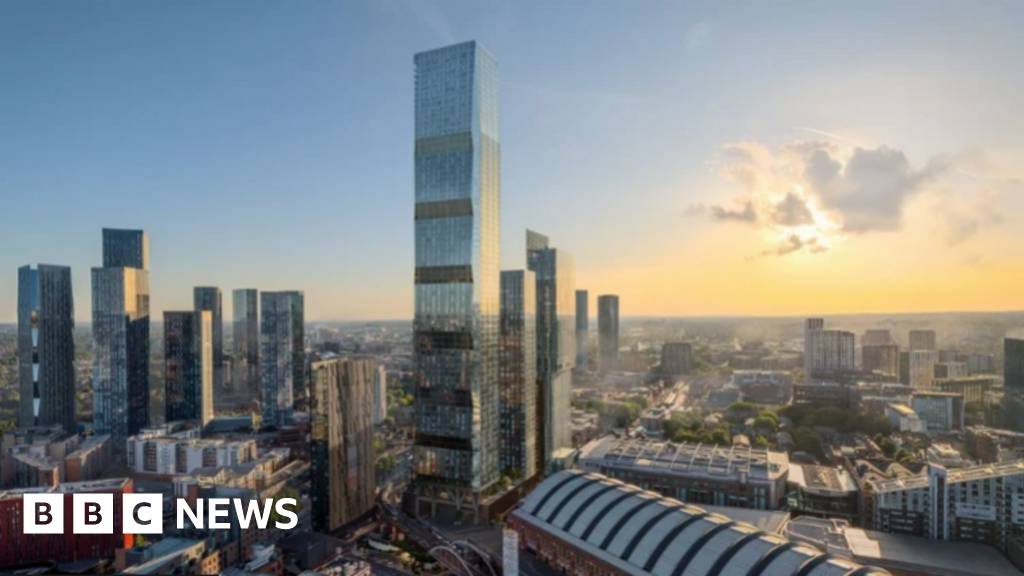
Manchester's skyline transformation has accelerated with the securing of a £50 million development loan for what will become the city's tallest residential tower. The 76-storey project represents more than architectural ambition - it signals sustained institutional confidence in Greater Manchester's property fundamentals at a time when many regional markets face uncertainty. This financing milestone arrives as Manchester's residential market has demonstrated remarkable resilience, with rental yields averaging 6.2% compared to London's 3.8%, making it increasingly attractive to both domestic and international capital.
The scale of this development loan underscores the fundamental shift in how institutional lenders view Manchester's property trajectory. While precise details of the financing structure remain commercially sensitive, the willingness to commit £50 million to a single residential scheme reflects sophisticated risk assessment that factors in Manchester's expanding technology sector, growing student population exceeding 100,000, and its position as the North's primary financial services hub outside London. This project will likely target the premium rental market, where Manchester has seen 18% growth in high-end lettings over the past 24 months, driven by professionals relocating from London and international students seeking luxury accommodation.
The regional implications extend well beyond Manchester's immediate boundaries, with this development likely to trigger comparable projects across the Northern Powerhouse cities. Leeds has already seen three major tower developments gain planning approval in 2024, while Birmingham's residential tower pipeline has expanded by 40% year-on-year. However, Manchester maintains its competitive advantage through superior transport connectivity - the completed Elizabeth line equivalent Northern Hub upgrades and planned High Speed 2 connections position it uniquely for continued capital appreciation. Property developers in Newcastle and Liverpool will watch this project's progress closely, as its success could unlock similar high-value financing for their own vertical residential schemes.
For buy-to-let investors, this development signals a maturation of Manchester's premium rental sector that could drive yields higher across the city's residential market. The tower's completion will likely attract high-earning professionals willing to pay premium rents for luxury accommodation, creating upward pressure on rental rates in surrounding areas. This ripple effect typically extends 1-2 kilometres from landmark developments, suggesting existing landlords in Manchester city centre should prepare for enhanced rental income potential over the next 36 months. Commercial investors should note that such prestigious residential developments often catalyse retail and hospitality investment in their vicinity, creating mixed-use ecosystems that enhance overall area values.
The financing structure also reflects broader market confidence in Build-to-Rent as an asset class, with institutional investors increasingly viewing professionally managed rental towers as inflation-hedged income streams. This £50 million commitment likely represents partial funding, suggesting the total project value exceeds £200 million - a scale that positions Manchester firmly in the premier league of UK property investment destinations. The development will compete directly with London's luxury rental market while offering significantly superior value propositions, potentially accelerating the geographic redistribution of high-net-worth renters that began during the pandemic.
Looking ahead to 2025, this project's progression will serve as a bellwether for confidence in regional high-rise development across the UK. Should pre-letting rates exceed 70% before completion - the threshold most lenders consider successful - expect similar financing to flow into comparable schemes in Birmingham's Eastside and Leeds' South Bank district. The success of Manchester's tallest tower will likely influence planning policy in other major cities, with local authorities recognising the economic benefits of facilitating landmark residential developments that enhance their international profile and attract mobile capital.
Manchester's £50 million tower loan represents a decisive vote of confidence in the city's property fundamentals that extends far beyond a single development. It confirms the Northern Powerhouse cities are transitioning from secondary markets to genuine alternatives to London's overheated property sector, offering superior yields and appreciation potential for investors willing to embrace regional diversification.
Key Takeaways
- Manchester's £50m tower loan signals institutional confidence in Northern England's premium property markets despite economic headwinds
- The project will likely drive rental yield growth across Manchester city centre, benefiting existing buy-to-let landlords within 2km radius
- Success could unlock similar high-value financing for tower developments in Birmingham, Leeds, and Liverpool over the next 18 months
- Build-to-Rent institutional investment is accelerating the geographic redistribution of high-value tenants away from London


