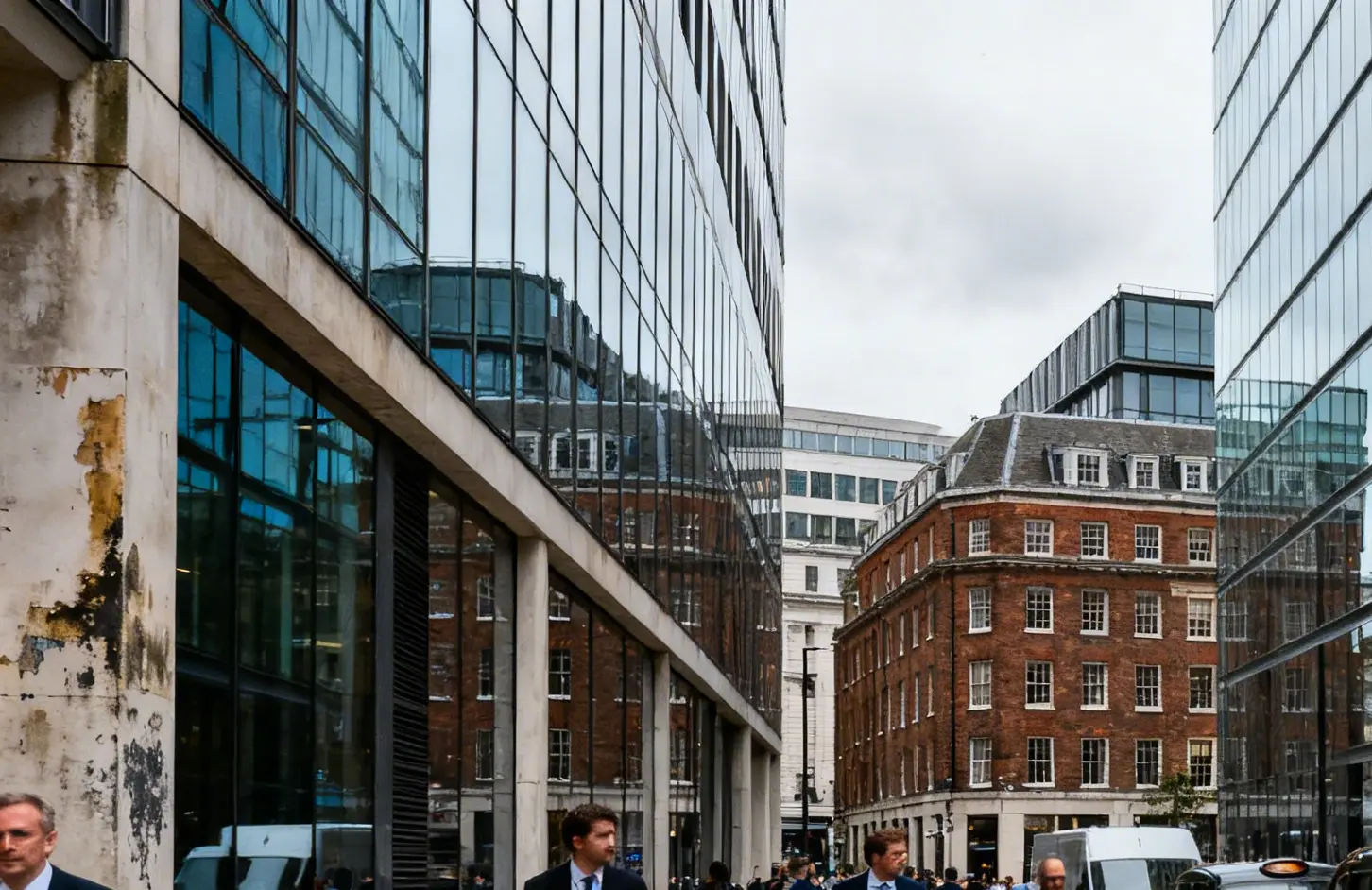
The commercial property market has received a significant vote of confidence as SHC Capital arranges sophisticated bridge financing for a £23 million City of London office acquisition programme, supporting a private investment group's bold strategy to double its £100 million portfolio within 24 months. This transaction underscores a fundamental shift in institutional attitudes towards central London commercial real estate, particularly as investors begin to distinguish between prime assets and secondary stock in the post-pandemic landscape.
The multi-stage bridging facility structure represents a particularly astute financing approach for today's commercial market conditions. Rather than deploying traditional development finance, the arrangement allows the investment group to move swiftly on acquisition opportunities whilst maintaining flexibility for refurbishment programmes that can command premium rents. With commercial mortgage rates currently ranging between 5.5% and 7.2% depending on loan-to-value ratios, bridge financing provides crucial speed-to-market advantages that conventional funding cannot match, especially when targeting assets requiring capital improvement.
The £23 million gross development value across four freeholds suggests an average asset value of £5.75 million per building, positioning these acquisitions firmly within the mid-market commercial segment that has demonstrated remarkable resilience throughout 2024. City of London office rents have stabilised at approximately £65-75 per square foot for Grade A space, whilst refurbished secondary assets now command £45-60 per square foot - a significant premium over comparable space in Canary Wharf or emerging markets like King's Cross. This pricing differential makes strategic refurbishment programmes particularly attractive for investors with access to flexible capital.
The investor group's ambition to double its portfolio from £100 million to £200 million within two years reflects broader institutional confidence in London's commercial fundamentals, despite persistent concerns about hybrid working patterns. Recent data from the City of London Corporation indicates that office occupancy rates have stabilised at 78% of pre-pandemic levels, whilst new lettings activity has increased by 23% year-on-year. This recovery is being driven primarily by flight-to-quality trends, where tenants are consolidating into premium space rather than maintaining larger footprints in secondary locations.
The strategic implications extend well beyond central London, as this type of aggressive commercial expansion typically signals broader market recovery. Manchester's commercial property market has already benefited from similar investor confidence, with yields compressing from 6.5% to 5.8% over the past 12 months, whilst Birmingham and Leeds are experiencing increased institutional interest as investors seek regional diversification. The ripple effect of London-focused commercial confidence traditionally spreads to regional markets within 6-9 months, suggesting significant opportunities for investors positioned in secondary cities.
For buy-to-let investors and property developers, this commercial market confidence provides crucial context for residential investment decisions. Areas with strong commercial property fundamentals - such as the broader City fringe, Shoreditch, and emerging locations like Stratford - typically demonstrate superior residential capital growth over 18-24 month periods. The correlation between commercial and residential performance remains particularly strong in London, where office workers' housing preferences directly influence rental demand patterns.
This transaction signals a decisive shift towards opportunistic commercial property investment strategies that prioritise speed of execution over traditional financing approaches. The combination of stabilising office demand, selective tenant requirements for quality space, and the availability of flexible funding structures creates compelling conditions for experienced commercial investors. Those institutions and private groups with access to bridge financing and refurbishment expertise are positioned to capture significant value as the London office market continues its structural transformation towards premium, amenity-rich workspace solutions.
Key Takeaways
- Bridge financing enables rapid commercial property acquisition in competitive City markets where speed matters more than cost of capital
- Mid-market office assets (£5-6m range) offer superior risk-adjusted returns through strategic refurbishment programmes
- City office rent premiums over secondary locations justify aggressive acquisition strategies for quality-focused investors
- Commercial property confidence typically precedes residential market recovery by 6-9 months in surrounding areas