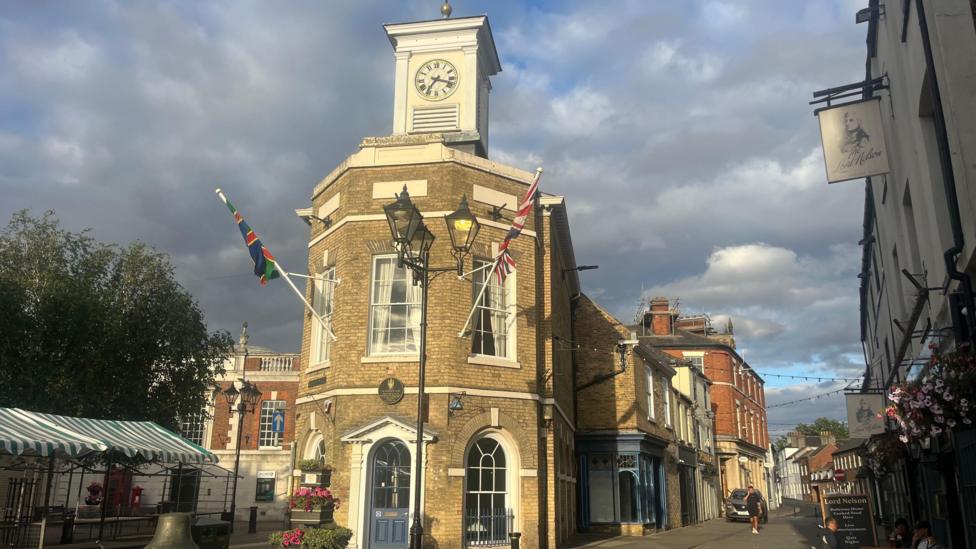
The banking hub serving Brigg in North Lincolnshire is relocating from its temporary premises to The Buttercross, a Grade II listed building dating from the 17th century, in a move that on the surface looks like a minor local services story but in fact illustrates a much larger structural shift now underway across the UK's high streets. As bank branches continue to close at pace — more than 6,000 have shut since 2015, according to Which? research — banking hubs have emerged as the sector's preferred replacement model, and where they land is beginning to shape commercial property values in market towns from Lincolnshire to Cumbria.
For property investors, the significance lies less in the banking service itself than in what it signals about occupier demand for historic, high-footfall units in town centres. Cash Access UK, which oversees the banking hub rollout on behalf of the major lenders, has now opened or committed to more than 200 hubs nationally, with a further 100-plus in the pipeline through 2025. Each hub represents a guaranteed, long-term commercial tenancy — typically backed by a consortium of banks rather than a single covenant — which makes these units unusually attractive to landlords in an era when many secondary retail pitches sit vacant for 18 months or more. A listed building such as The Buttercross, which might otherwise struggle to attract a commercial tenant willing to absorb higher maintenance and compliance costs, suddenly becomes viable through this public-interest tenancy model.
The wider context matters here. Bank branch closures have hit market towns and rural high streets disproportionately hard, stripping out both footfall and the anchor tenant effect that a bank branch traditionally provided for neighbouring retailers, cafes and professional services. Research from the Federation of Small Businesses has linked branch closures to measurable declines in adjacent commercial rents, sometimes by 10-15% within two years of a closure. The banking hub model, by contrast, appears to be partially reversing that dynamic in the towns where it lands, restoring a reason for older residents and small business owners to visit the centre in person — a customer base that still overwhelmingly prefers face-to-face banking for cash handling and complex queries.
This has clear implications beyond Lincolnshire. In larger regional cities — Manchester, Birmingham, Leeds, Liverpool and Newcastle — the banking hub trend is less about propping up town centres than about filling gaps left by branch closures in specific suburbs and outer boroughs, where footfall-dependent secondary retail has been hit hardest by the shift to online banking. In the South East, including commuter towns around Surrey, banking hubs have tended to locate in smaller market towns rather than the larger centres, where branch networks have generally held up better due to higher-value banking activity. London itself has seen comparatively few hubs open, reflecting both higher property costs and the concentration of remaining full-service branches in the capital's wealthier boroughs.
For commercial property investors and developers, the pattern emerging is worth watching closely. Adaptive reuse of listed and heritage buildings — previously seen as a planning headache with limited commercial upside — is gaining a new tenant class with government-adjacent backing and multi-year lease commitments. This should encourage landlords holding vacant or underused historic units in market towns to engage proactively with Cash Access UK and LINK, the ATM network operator that assesses communities for banking hub eligibility based on branch closure history and cash access needs. Local authorities pursuing town centre regeneration funding, including Levelling Up and Long-Term Plan for Towns allocations, would also do well to factor banking hub placement into wider heritage asset strategies, since the two are increasingly complementary rather than competing priorities.
Looking ahead to the next 6-12 months, expect the pace of hub openings to accelerate rather than slow, with the major banking groups under continued pressure from consumer groups and MPs to demonstrate they are meeting cash access commitments following the 2023 access to cash legislation. For buy-to-let landlords and commercial investors alike, the practical takeaway is that ground-floor units in listed buildings within designated town centres — previously discounted for their compliance burden — now carry a credible institutional tenant option that didn't exist five years ago. First-time buyers and residential landlords in towns like Brigg benefit indirectly too: retained banking infrastructure supports the kind of town centre viability that underpins house price resilience in smaller markets, an increasingly relevant factor as buyers weigh commuter towns against city centre premiums.
Key Takeaways
- Banking hubs now number over 200 nationally, with 100-plus more planned through 2025, creating a new institutional tenant class for high street landlords.
- Listed and heritage buildings in market towns, previously hard to let commercially, are becoming viable again through multi-bank-backed hub tenancies.
- Branch closures have historically depressed adjacent commercial rents by 10-15%; hub openings appear to partially reverse this in affected towns.
- Commercial investors should engage with Cash Access UK and LINK directly when assessing vacant heritage units in eligible town centres.
- Regional impact varies: larger cities see hubs filling suburban gaps, while smaller market towns benefit most from the town centre anchor effect.


