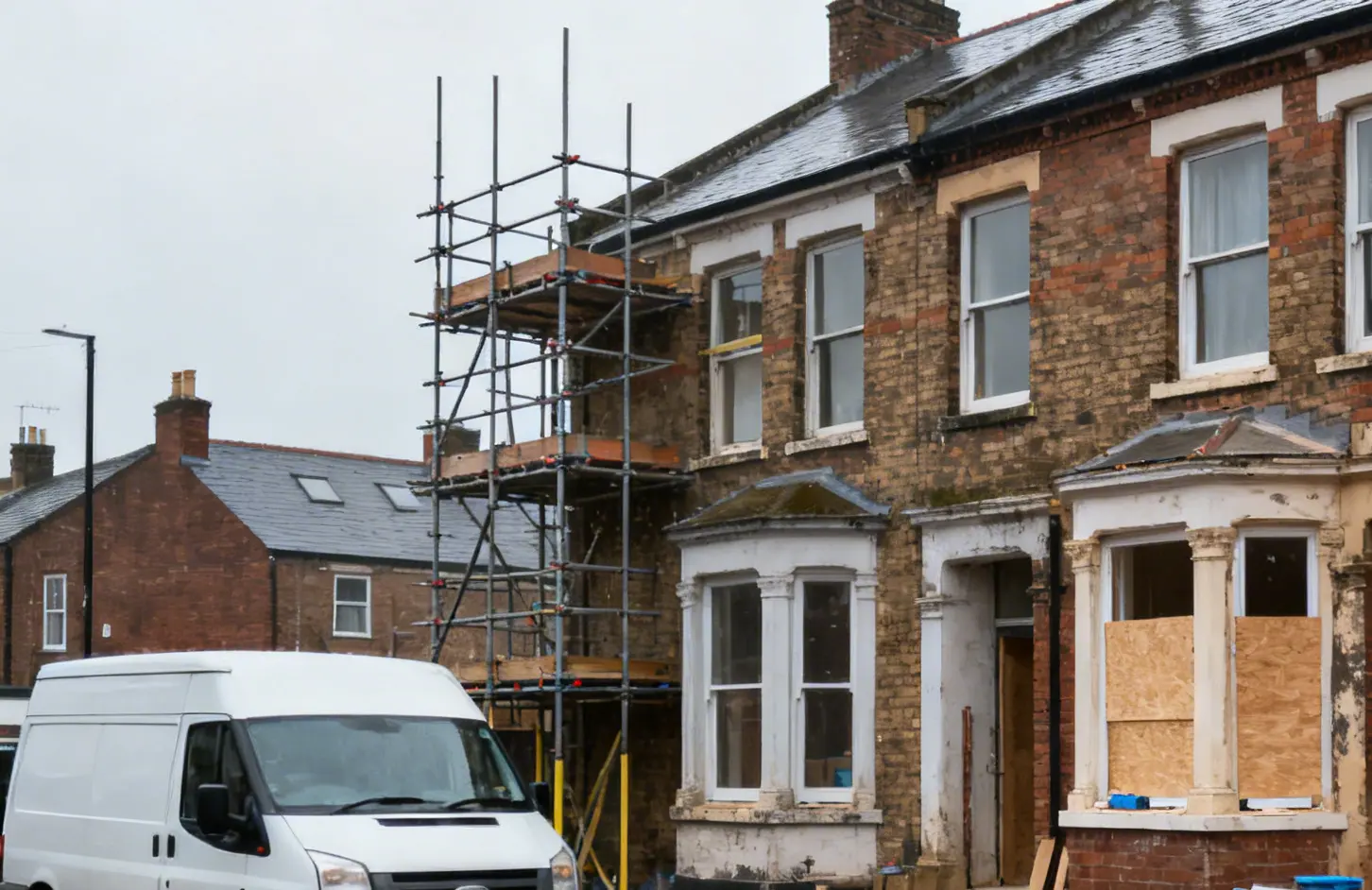
The emergence of sophisticated bridging finance products is catalysing a fundamental shift in how distressed hospitality assets enter the residential market, with Precise Mortgages' latest deal exemplifying the sector's evolution beyond traditional development finance. The lender's provision of 70% loan-to-value funding with staged drawdowns reflects growing institutional confidence in pub-to-residential conversions, a market segment that has expanded 340% since permitted development rights were extended in 2021.
This financing innovation addresses a critical bottleneck that has historically constrained small-scale residential conversion projects. Traditional development finance typically requires borrowers to demonstrate substantial upfront capital and detailed planning consent before accessing funds. The staged drawdown model allows former publicans and small developers to secure initial funding based on existing assets, then access additional tranches as conversion milestones are achieved. This approach is particularly significant given that an estimated 2,100 pubs across England remain vacant or underutilised, representing approximately £2.3 billion in dormant property value.
Regional markets are experiencing markedly different conversion dynamics, with secondary cities demonstrating the strongest fundamentals for pub-to-residential projects. In Manchester and Birmingham, former pub sites are commanding residential values of £180-220 per square foot following conversion, compared to original hospitality use values of £85-110 per square foot. Liverpool and Newcastle present even more compelling arbitrage opportunities, where residential conversions can achieve 180-200% uplifts on original pub valuations. London's market dynamics differ substantially, with planning restrictions and higher acquisition costs creating barriers that favour larger developers over individual former pub owners.
The appetite for flexible bridging products reflects broader structural changes in both hospitality and residential markets. Britain's pub estate has contracted by 7,000 properties since 2010, while residential demand in town centres has intensified following pandemic-driven shifts in living preferences. Conversion projects typically generate 2-4 residential units per former pub, with gross development values ranging from £320,000 in northern markets to £1.2 million in southern locations. These economics support bridging rates of 8-12% annually, creating sustainable returns for specialist lenders while offering developers access to projects that traditional banks consider too complex or small-scale.
For buy-to-let investors, converted pub properties present distinctive advantages and risks that require careful evaluation. Former pub buildings often feature robust construction, high ceilings, and established utility connections that can support premium residential specifications. However, ongoing concerns about noise complaints from neighbouring commercial premises and potential restrictions on future development can affect long-term capital appreciation. Rental yields on converted pub properties are typically achieving 6-8% in secondary cities, comparing favourably to 4-5% yields on equivalent new-build residential stock.
The trajectory for pub-to-residential conversions will accelerate through 2024-25, driven by three convergent factors: expanding bridging finance availability, streamlined permitted development processes, and continued residential demand in mixed-use locations. Precise Mortgages' deal structure suggests that specialist lenders are developing increasingly sophisticated risk assessment capabilities for conversion projects, potentially expanding financing access to a broader range of hospitality-to-residential schemes. This evolution positions former pub owners as accidental property developers, equipped with existing assets and increasingly accessible capital to participate in residential conversion opportunities.
The implications extend beyond individual conversion projects to broader questions about town centre regeneration and housing supply. As bridging lenders refine their approach to hospitality asset conversions, expect similar financing innovations to emerge for other distressed commercial property classes, including former retail units and office buildings. The success of staged drawdown products in the pub conversion market provides a template for unlocking residential development potential across Britain's underutilised commercial property stock, potentially contributing 15,000-20,000 additional residential units annually by 2026.
Key Takeaways
- Staged drawdown bridging finance is removing capital barriers for pub-to-residential conversions, with 70% LTV products now widely available
- Secondary cities offer superior conversion economics, with residential values achieving 180-200% uplifts on original pub valuations
- Converted pub properties generate 6-8% rental yields in regional markets, outperforming equivalent new-build stock by 150-200 basis points
- The financing model's success will likely expand to other commercial-to-residential conversion opportunities, potentially adding 15,000-20,000 units annually


