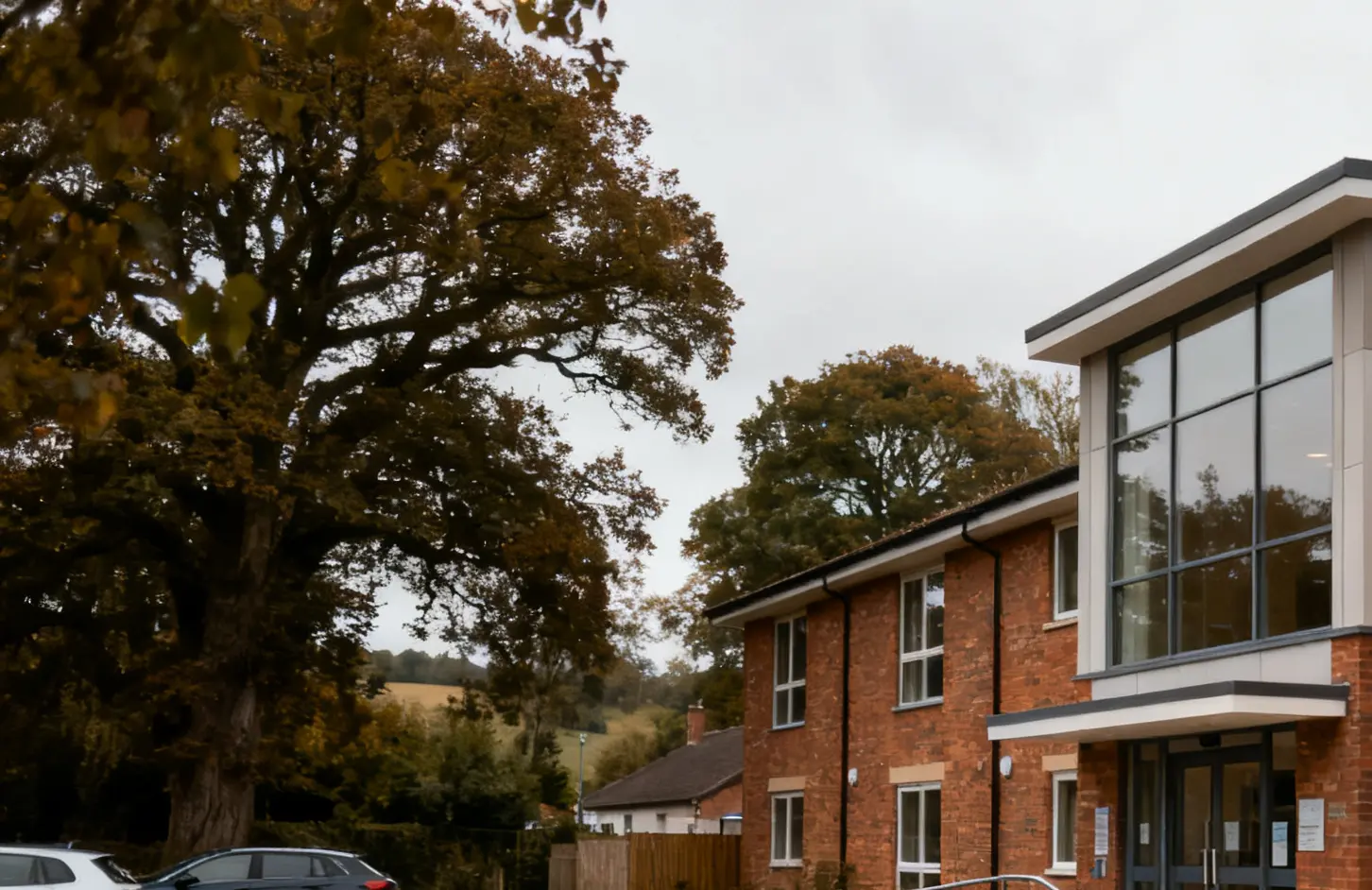
Octopus Capital's forward funding commitment for two new care facilities totalling 136 beds across Staffordshire and Norfolk represents the latest manifestation of institutional capital's decisive pivot towards healthcare real estate. The transaction, executed through the firm's dedicated Octopus Healthcare Fund, crystallises a broader strategic shift as investors seek assets with embedded inflation protection and recession-resistant income streams. This deal positions Octopus to capitalise on the UK's acute care bed shortage, which industry analysis suggests requires an additional 50,000 beds nationally by 2030 to meet demographic demand.
The geographic positioning across Staffordshire and Norfolk demonstrates sophisticated regional targeting, with both counties experiencing above-average population ageing rates and limited existing care infrastructure. Staffordshire's care home occupancy rates consistently exceed 85%, whilst Norfolk's coastal demographic profile - characterised by retirement migration - creates sustained demand fundamentals that traditional residential investment cannot match. Forward funding structures have become the preferred vehicle for healthcare property investment, allowing developers to secure capital certainty whilst investors lock in assets before construction completion, typically achieving net initial yields between 5.5% and 6.5%.
The wider institutional appetite for healthcare assets reflects compelling sector fundamentals that distinguish care homes from mainstream commercial property. Rental indexation mechanisms embedded within operator leases typically provide annual uplifts linked to RPI or fixed escalators, offering superior inflation hedging compared to traditional office or retail assets. Occupancy resilience during economic downturns - care needs being largely inelastic - provides defensive characteristics particularly attractive to pension funds and insurance companies seeking long-term, stable cash flows. Industry data indicates that purpose-built care facilities achieve average occupancy rates of 92%, significantly outperforming many commercial property sectors.
Octopus Healthcare Fund's expansion strategy aligns with broader market dynamics driving institutional allocation towards alternative property sectors. The fund's forward funding approach enables developers to achieve competitive pricing whilst securing pre-let arrangements with established care operators, reducing development risk and ensuring operational certainty upon completion. This model has proven particularly effective across the Midlands and East Anglia, where land values remain attractive relative to London whilst demographic pressures intensify. The 136-bed combined capacity suggests individual facility sizes of approximately 65-70 beds each, optimising operational efficiency whilst maintaining the boutique scale preferred by modern care operators.
Market implications extend beyond immediate transaction value, signalling continued institutional confidence in healthcare property's defensive characteristics amid broader economic uncertainty. Care home investment has demonstrated remarkable resilience, with specialist REITs in this sector delivering average total returns exceeding 8% annually over the past five years, substantially outperforming traditional property indices. The forward funding structure enables Octopus to secure assets at current construction costs whilst benefiting from rental growth and capital appreciation upon completion, typically delivering IRRs in the 7-9% range for institutional investors.
Regional market analysis suggests that similar opportunities will proliferate across secondary cities including Birmingham, Leeds, and Newcastle, where demographic transition accelerates but institutional capital allocation remains limited. Care home development pipeline constraints - driven by planning complexity and specialist operational requirements - create artificial scarcity that supports robust investment returns. The sector's defensive qualities become increasingly attractive as traditional commercial property faces structural challenges from remote working and changing retail patterns.
This transaction confirms healthcare property's emergence as a core institutional asset class rather than opportunistic alternative investment. Octopus Healthcare Fund's expanding portfolio positions the firm advantageously as demographic pressures intensify and government policy increasingly emphasises private sector care provision. The forward funding model will likely become standard practice, enabling institutional investors to secure attractive risk-adjusted returns whilst supporting essential infrastructure development across underserved regional markets.
Key Takeaways
- Care home forward funding delivers superior inflation protection and defensive income streams compared to traditional commercial property
- Staffordshire and Norfolk positioning targets regions with acute care bed shortages and favourable demographic transitions
- Healthcare property sector offers institutional investors 7-9% IRR potential with occupancy resilience exceeding 90%
- Forward funding structures enable developers to secure competitive capital whilst providing investors with inflation-indexed rental growth


