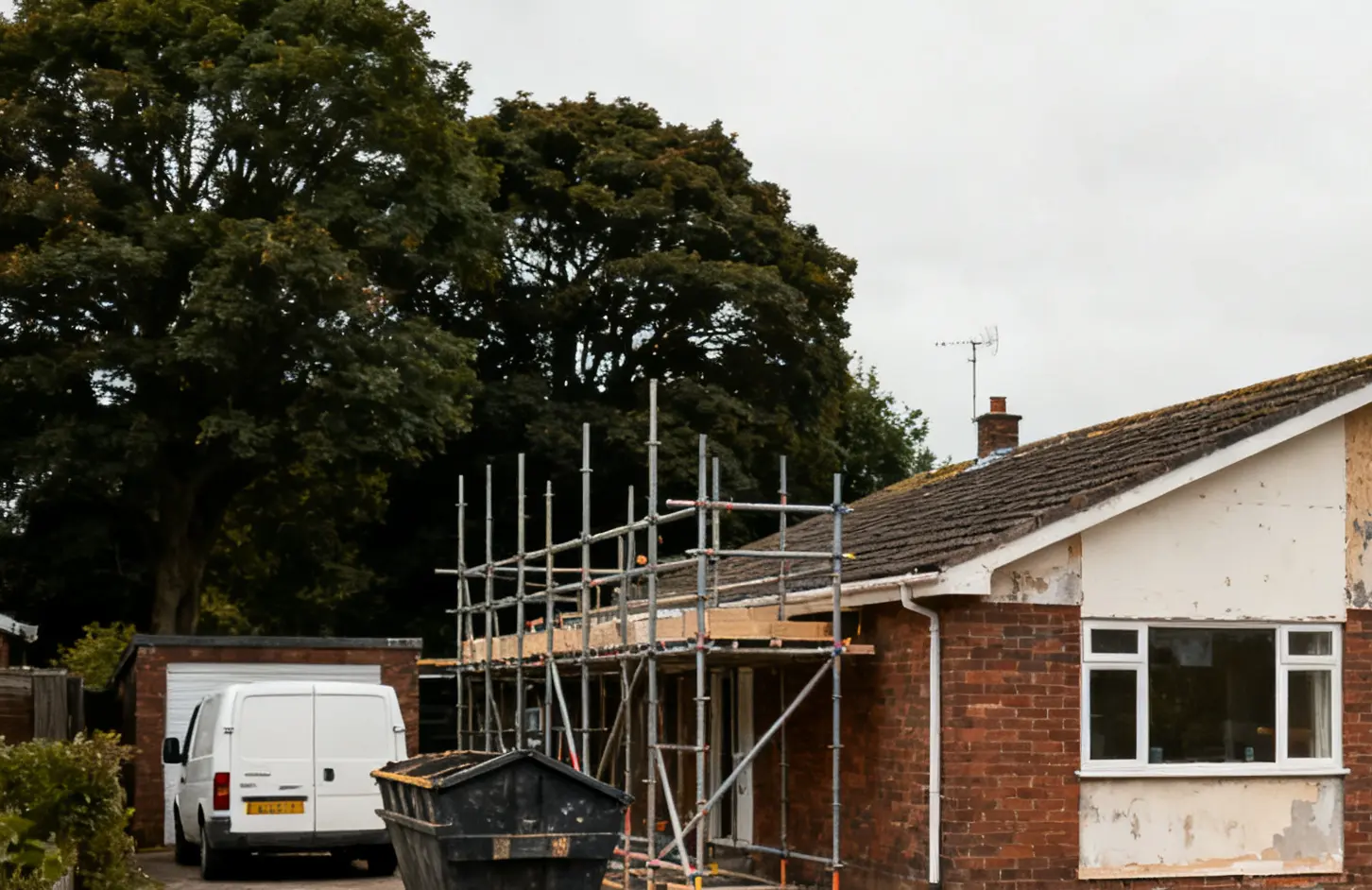
The successful completion of financing for a Northwich bungalow transformation project underscores the exceptional profit potential available to developers targeting outdated residential stock across the North West. Charles Street Finance's £900,000 facility enables the conversion of a 1970s single-storey property into a five-bedroom home with an anticipated end value of £2 million, delivering a gross development value of 320% against total construction costs of £630,000.
This transaction reflects a broader trend reshaping property development strategy across Greater Manchester and Cheshire, where developers increasingly recognise that comprehensive redevelopment of existing housing stock can yield superior returns to new-build projects. With average house prices in Northwich rising 8.3% year-on-year to approximately £280,000, according to recent Land Registry data, the ability to create a £2 million asset in this market demonstrates the premium buyers will pay for genuinely exceptional properties. The mathematics are compelling: total project costs including finance will likely reach £750,000-£800,000, suggesting a potential profit margin exceeding £1.2 million for a ten-month construction period.
The regional context amplifies the significance of this development approach. Across Cheshire's commuter belt, planning authorities have grown increasingly receptive to proposals that enhance housing density and quality without requiring greenfield development. This regulatory environment particularly favours projects that transform underutilised bungalows on substantial plots into family homes that better serve local housing demand. Similar opportunities exist throughout the M6 corridor, where substantial bungalows built during the 1960s and 1970s sit on plots capable of supporting much larger developments.
For institutional and private investors, the Northwich project highlights the attraction of development finance as an asset class. Charles Street Finance's willingness to provide £900,000 against a £2 million end value suggests confidence in both the local market and the development team's execution capability. Development finance lenders typically advance 65-75% of gross development value, indicating this transaction sits within established risk parameters whilst offering returns significantly above traditional buy-to-let yields. With rental yields across Cheshire averaging 4.2-4.8%, development projects delivering 150-200% returns within twelve months present compelling alternatives for capital deployment.
The broader implications extend to housing supply dynamics across the North West property market. Local authorities in Warrington, Macclesfield, and Chester face identical challenges around housing quality and density, creating systematic opportunities for developers pursuing similar strategies. The transformation of single-storey properties into substantial family homes addresses acute shortages in the £1.5-£2.5 million market segment, where supply constraints have driven price appreciation consistently above regional averages. This supply-demand imbalance suggests sustainable profit opportunities for developers with appropriate expertise and financing relationships.
Looking ahead twelve months, the combination of persistent housing shortages, supportive planning frameworks, and abundant capital seeking development opportunities will likely drive increased activity in this market segment. The Northwich project's financing structure provides a template for scaling similar developments across comparable markets, particularly in suburban locations within commuting distance of Manchester and Liverpool. However, success requires sophisticated understanding of local planning requirements, construction cost management, and sales timing to achieve the profit margins this transaction promises.
The Charles Street Finance deal ultimately demonstrates that residential development remains one of the UK property market's most lucrative sectors for participants with appropriate expertise and risk appetite. With construction costs stabilising after recent volatility and mortgage availability improving for high-value purchases, the fundamentals supporting premium residential development projects have strengthened considerably. Developers targeting similar opportunities should focus on locations with strong transport links, established affluent demographics, and planning authorities supportive of sensitive intensification projects.
Key Takeaways
- Comprehensive bungalow redevelopments can deliver 320% gross development values with ten-month construction timelines in prime commuter locations
- Development finance markets remain highly liquid for projects with strong end values, with lenders advancing up to 75% of gross development value
- Cheshire and Greater Manchester planning authorities increasingly support residential intensification projects that enhance housing quality and density
- The £1.5-£2.5 million housing segment faces acute supply constraints, creating sustained profit opportunities for premium residential developers


