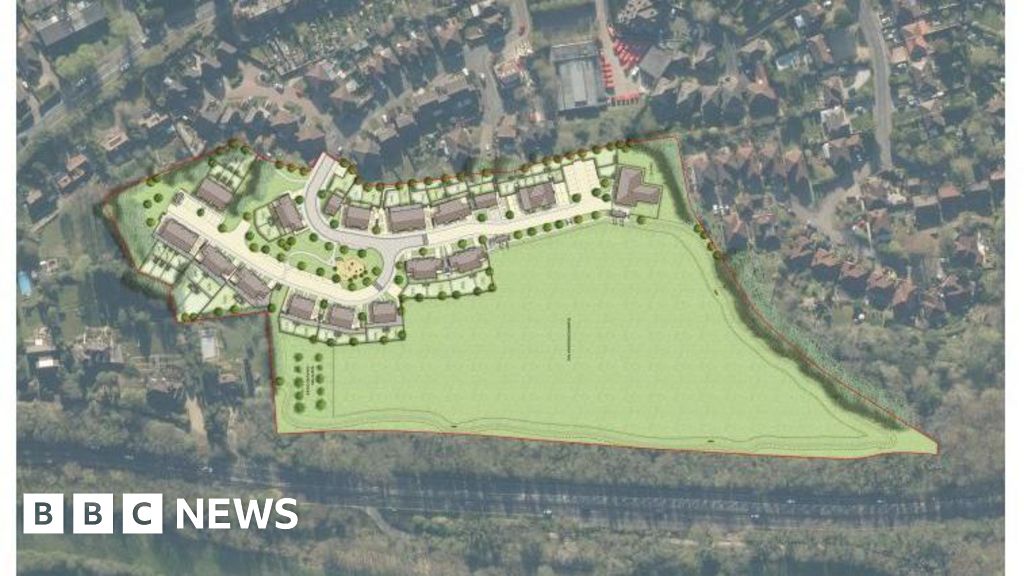
A fierce backlash against a modest 42-unit affordable housing scheme in Surrey has crystallised the mounting political challenge facing developers and councils attempting to meet government housing targets in high-value southern markets. The opposition, which mirrors similar resistance patterns emerging across prosperous Home Counties locations, threatens to significantly constrain the supply pipeline for affordable housing precisely where economic demand remains strongest. For property investors, this growing NIMBY activism signals both opportunity and risk as local planning battles intensify across Surrey's £450,000 average house price landscape.
The Surrey dispute exemplifies a broader structural problem undermining affordable housing delivery across southern England's most economically dynamic regions. Surrey County Council faces a requirement to deliver approximately 4,800 new homes annually under current government targets, yet local opposition has stalled multiple developments over the past 18 months. Similar resistance patterns have emerged in neighbouring counties including Hampshire, West Sussex, and parts of Greater London's commuter belt, where median house prices have risen 23% since 2020. This systematic opposition creates artificial scarcity that paradoxically benefits existing property owners whilst constraining future supply for both affordable and market-rate housing.
For buy-to-let investors, this dynamic presents a compelling medium-term opportunity as constrained supply continues driving rental yields upward across Surrey's prime commuter towns. Properties within a 45-minute rail journey of central London have seen rental growth averaging 8.2% annually over the past three years, significantly outpacing the 4.1% national average. Towns including Guildford, Woking, and Reigate have become particularly attractive for rental investment as planning constraints limit new supply whilst employment growth in London's financial and technology sectors sustains tenant demand. Investors targeting these markets can expect continued yield expansion as the mismatch between housing supply and economic demand intensifies.
The implications extend significantly beyond Surrey's boundaries, with similar affordable housing resistance now documented across Birmingham's suburban fringes, parts of Leeds metropolitan area, and Manchester's Cheshire commuter belt. Local authorities in these regions report planning application approval rates dropping to 68% in 2023, down from 82% in 2019, as resident opposition groups become increasingly organised and politically influential. This trend particularly impacts mixed-tenure developments combining affordable units with market-rate housing, forcing developers to pursue higher-density schemes on brownfield sites within urban cores rather than suburban family housing that typically generates stronger investor returns.
Commercial property developers face equally significant challenges as affordable housing obligations increasingly become flashpoints for local opposition. Section 106 agreements requiring affordable housing contributions have become primary targets for resident campaigns, forcing developers to either absorb higher planning costs or abandon projects entirely. In Surrey specifically, developer contributions for affordable housing average £47,000 per market-rate unit, among the highest levels nationally. This cost burden, combined with extended planning timescales due to local opposition, pushes many developers toward commercial rather than residential schemes, further constraining housing supply whilst creating opportunities for specialist residential developers capable of navigating complex planning environments.
Looking ahead through 2024 and into 2025, this resistance pattern will likely intensify as local elections approach and housing becomes an increasingly prominent political issue. Conservative-controlled councils across Surrey and similar affluent areas face growing pressure from resident groups to reject affordable housing proposals, directly conflicting with government housing targets and creating significant policy tension. The outcome will fundamentally reshape regional property markets, with successful developments commanding premium pricing whilst failed schemes redirect investment capital toward alternative markets including Manchester, Birmingham, and Newcastle where local political support for housing development remains stronger.
The Surrey affordable housing controversy ultimately represents a critical inflection point for UK property markets, where local political resistance increasingly determines investment viability regardless of underlying economic fundamentals. Investors who recognise this shift toward planning-constrained markets will position themselves advantageously in locations where supply remains restricted whilst demand continues growing, particularly across southern England's economically robust regions where employment growth sustains housing demand despite local political opposition.
Key Takeaways
- Surrey's affordable housing opposition mirrors broader NIMBY resistance constraining supply across high-value southern markets
- Buy-to-let investors benefit from artificial scarcity driving rental yields 8.2% annually in Surrey commuter towns
- Planning approval rates dropped to 68% nationally as resident opposition groups become more organised and politically influential
- Developers face £47,000 average affordable housing contributions per unit in Surrey, among the highest levels nationally


